We tend to lump a few types of maples under the category of ‘Japanese Maple’.
We carry a few groups of these smaller-growing, garden maples.
Plants pictured were in stock at the time of this posting. However, we have only onsies and twosies of some varieties. Give us a call or, by chance, your favorite may still be in stock when you arrive. We are sure something will catch your eye when you visit!
Japanese Maple, Acer japonica
Fullmoon maple is a slow growing deciduous tree native to mountainous areas of Japan, Manchuria, and Korea. It has rounded leaves which look much like a full moon, hence the common name. Upright to spreading, small tree or large shrub has smooth, gray bark, often appearing in a multitrunked form and grows up to 15-30’ tall. Leaves turn yellow and red in fall.
Plants prefer cool summer conditions with lightly dappled shade though they will tolerate full sun. Moist well drained soil is preferred. Site in locations protected from strong winds. Leaves may scorch in full sun. Zone 5. Not Guaranteed
- Acer japonicum ‘Aconitifolium’ (Fernleaf Maple)
- Acer japonicum ‘Rising Sun’ (Rising Sun Full Moon Maple)
- Acer japonicum ‘Vitifolium’ (Grapeleaf Full Moon Maple)
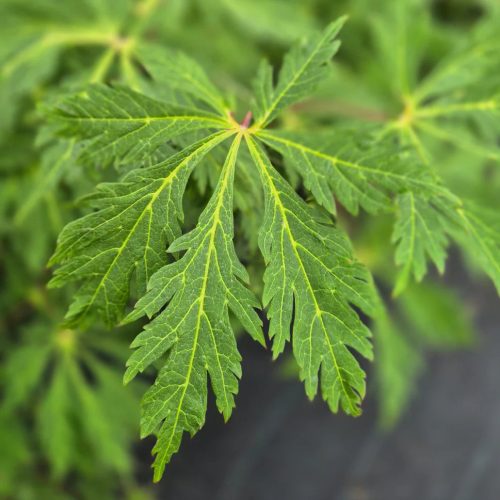
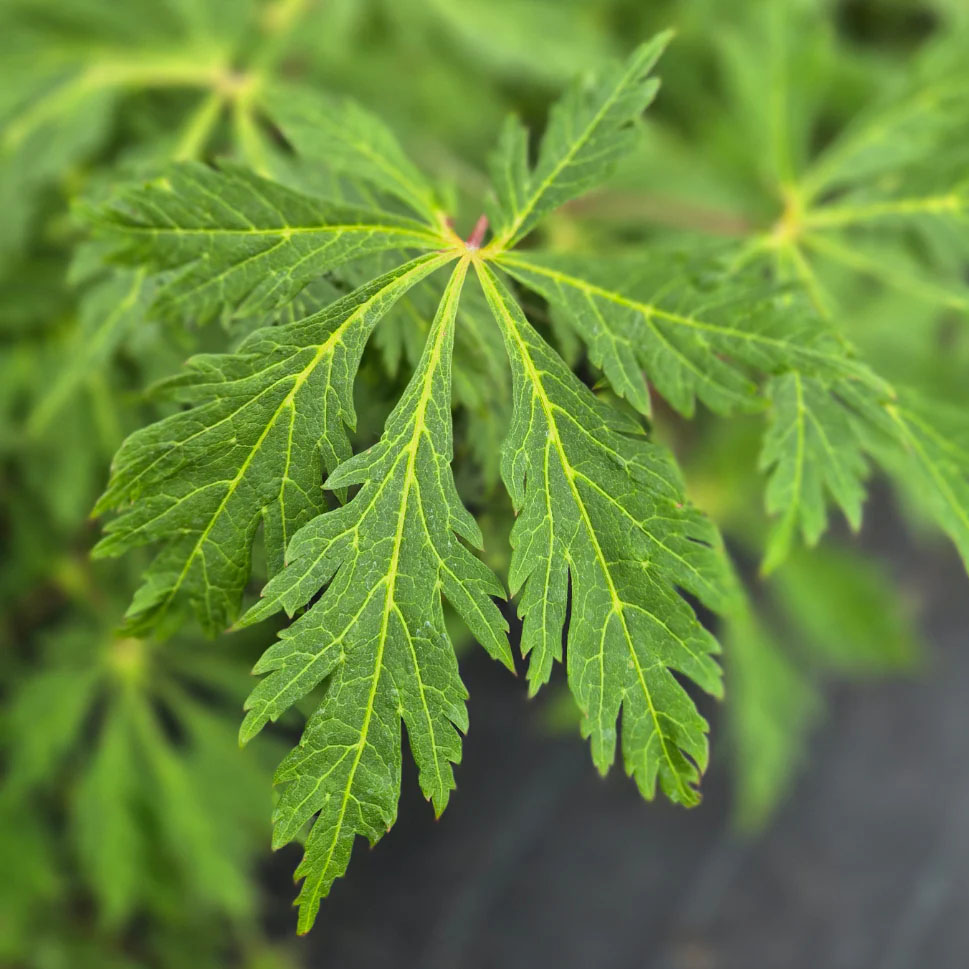
Acer japonicum ‘Aconitifolium’, Fern Leaf Maple
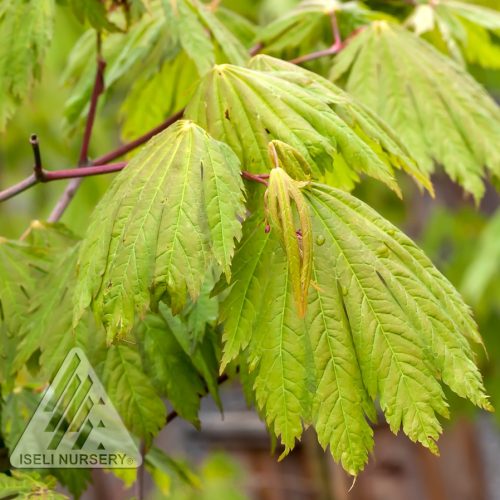
Acer japonicum ‘Rising Sun’, Rising Sun Full Moon Maple
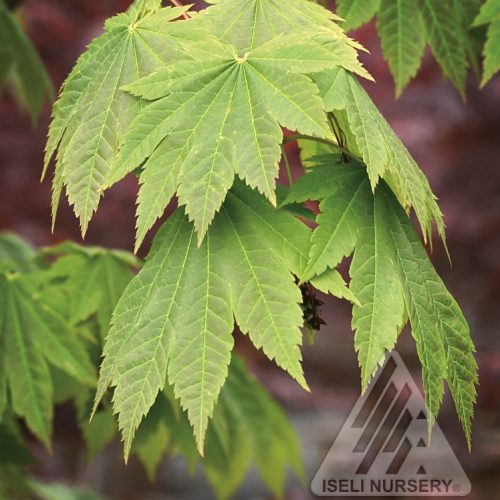
Acer japonicum ‘Vitifolium’, Grape Leaf Full Moon Maple
Japanese Maple, Acer palmatum
Typically grows to 10-25′ tall. Native to Japan, Korea and China. General plant form is rounded to broad-rounded, often with low branching. Fall color includes shades of yellow, red-purple and bronze.
Best grown in moist, organically rich, slightly acidic, well-drained soils in full sun to part shade. Grows well in sandy loams. New foliage may scorch in full sun locations in hot summers areas, particularly if soils are not kept consistently moist. Site in locations protected from strong winds. Avoid hot and dry sites. Fertilize in spring before leaves emerge. Pruning is best kept to a minimum, but if needed should be done in late fall to mid winter. Spring or summer pruning often results in significant bleeding. Zone 5. Not Guaranteed
- Acer palmatum ‘Arakawa’
- Acer palmatum ‘Bloodgood’
- Acer palmatum ‘Fireglow’
- Acer palmatum ‘Katsura’
- Acer palmatum ‘Koto maru’
- Acer palmatum ‘Koto-no-ito’
- Acer palmatum ‘Mikawa yatsubusa’
- Acer palmatum ‘Pung kil’
- Acer palmatum ‘Rhode Island Red’
- Acer palmatum ‘Sango kaku’
- Acer palmatum ‘Tsukushi gata’
- Acer palmatum ‘Tsuma gaki’
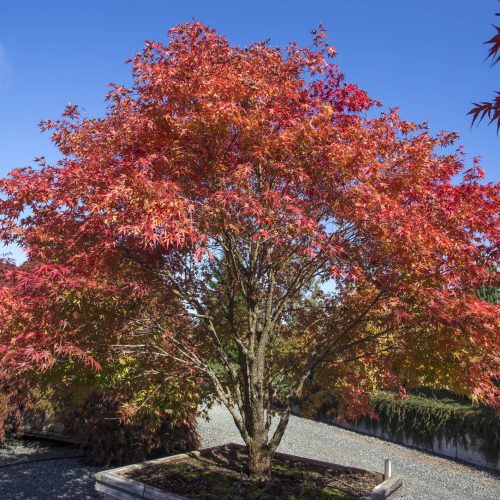
Acer palmatum ‘Arakawa’, Rough Bark Japanese Maple
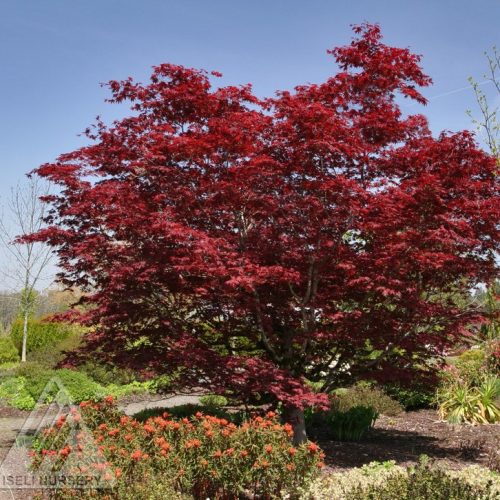
Acer palmatum ‘Bloodgood’, Bloodgood Japanese Maple
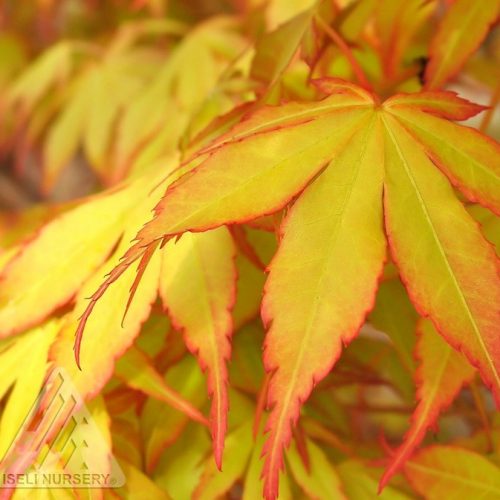
Acer palmatum ‘Katsura’, Katsura Japanese Maple
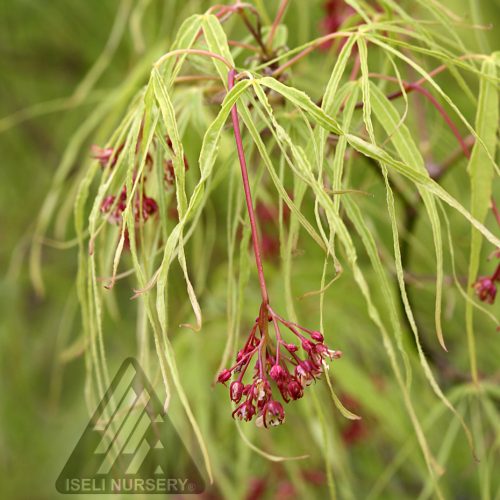
Acer palmatum ‘Koto-no-ito’, Harp String Japanese Maple
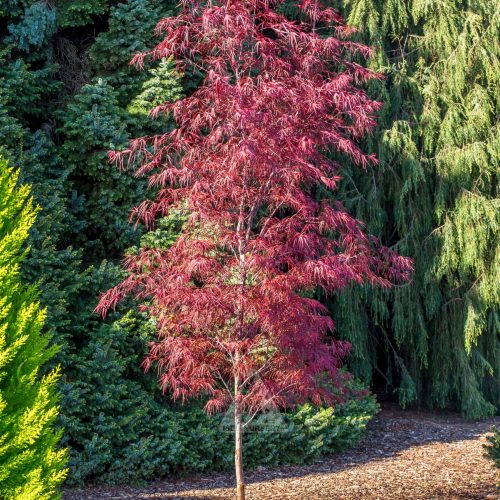
Acer palmatum ‘Pung-Kil’
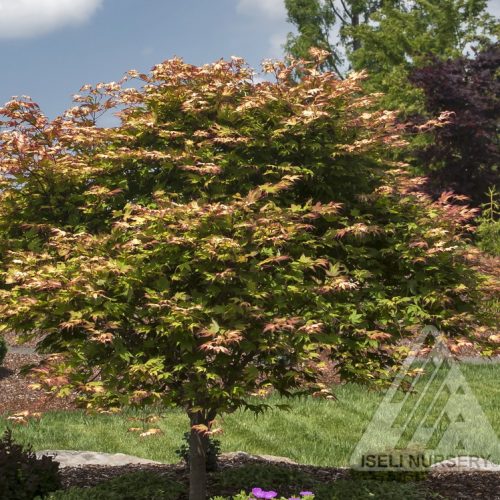
Acer palmatum ‘Tsuma-Gaki’
Cutleaf Japanese Maple, Acer palmatum var. dissectum
Typically a much smaller, rounded, slow-growing shrubby form (often with cascading branching) that rarely matures to more than 12′ tall with a larger spread. Palmate leaves, each having 7-11 deeply incised lobes, are deeply cut to the base of the leaf. These dissected-leaf shrubs are commonly called laceleaf Japanese maple, cutleaf Japanese maple or threadleaf Japanese maple. Dissectum means deeply cut in reference to the deeply cut, feathery nature of the leaves.
Best grown in moist, organically rich, slightly acidic, well-drained soils in full sun to part shade. Grows well in sandy loams. May be grown in full sun in the northern parts of its growing range, but prefers some part afternoon shade. New foliage may scorch in full sun locations in hot summers areas, particularly if soils are not kept consistently moist. Avoid hot and dry sites. Site in locations protected from strong winds. Pruning is best kept to a minimum, but if needed should be done in late fall to mid winter. Spring or summer pruning often results in significant bleeding. Zone 5. Not Guaranteed
‘Orangeola’
‘Spring Delight’
‘Tamukeyama’
‘Viridis’
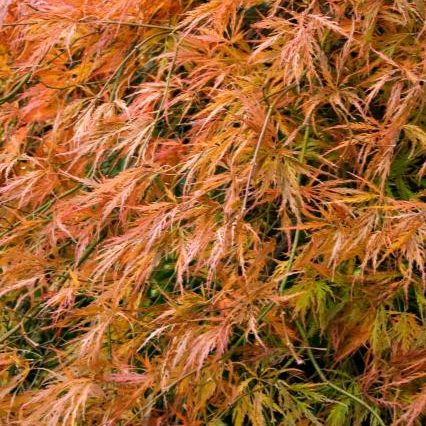
‘Orangeola’
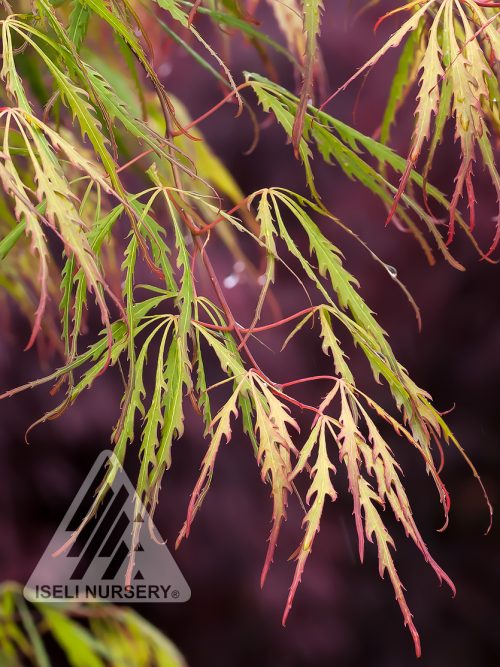
‘Spring Delight’
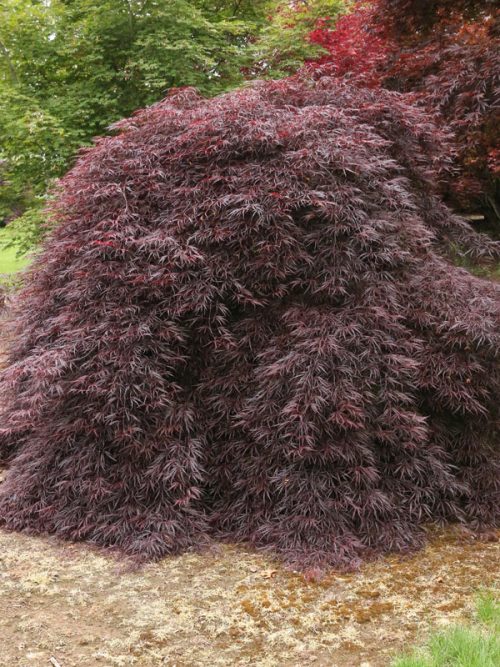
‘Tamukeyama’
Korean Maple, Acer pseudosieboldianum
Korean maple is a deciduous, small tree or large shrub. The varieties we carry are Iseli Nursery hybrids between Korean and Japanese Maples Leaves turn beautiful shades of yellow, orange, and red in fall.
Easily grown in moist, organically, well-drained soils. Performs well in full sun or bright, sun-dappled locations. Avoid hot and dry sites. Plant in locations protected from strong winds. Zone 5. Not Guaranteed
‘Final Fire’
‘First Flame’
‘North Wind’
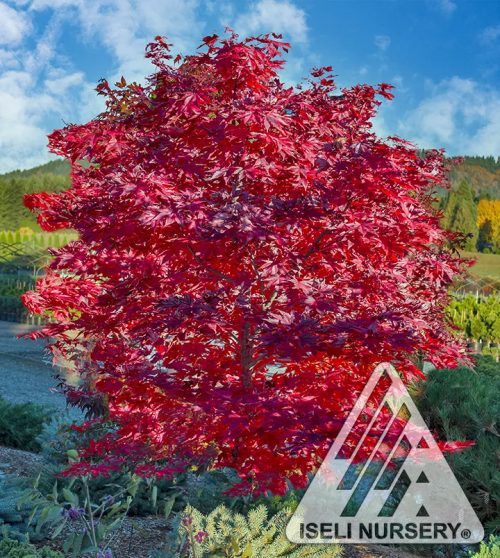
‘Final Fire’ fall color
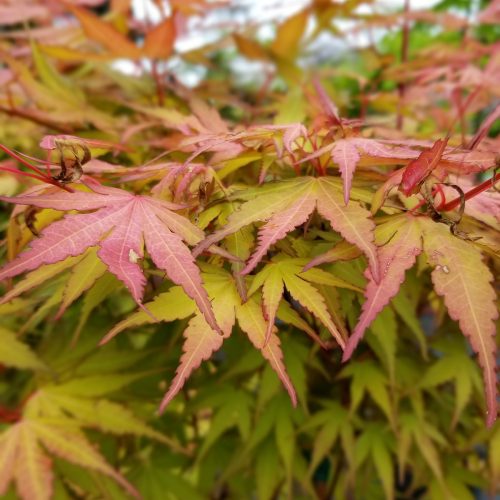
‘First Flame’
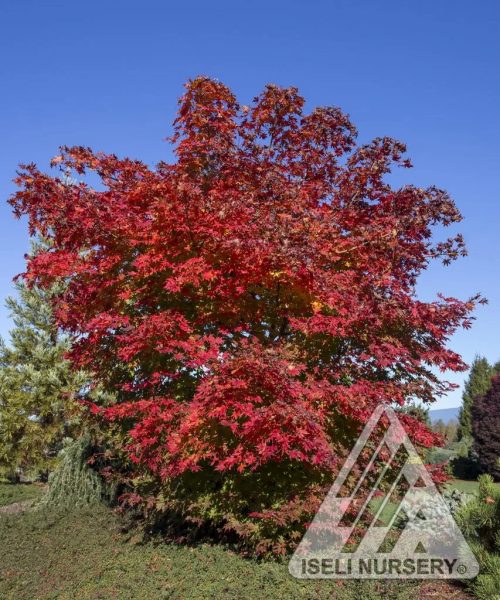
‘North Wind’ fall color
Full Moon Maple, Acer shirasawanum
It is somewhat confusing how Acer shirasawanum and Acer japonicum are both commonly known as the “full moon maple.” They do share a similar leaf type with lobes that radiate symmetrically to form a moon shape. However, using the Latin names is the most accurate way to describe these species. Both of these trees offer a distinctly different appearance than the typical Japanese maple (Acer palmatum) making them unique or even collectible landscape choices.
Besides the iconic leaf shape mentioned above, one other distinguishing features of Acer shirasawanum is the unique color of the bark. On older trees, the branches are clearly a silvery-white color with fairly smooth texture. Two of the most highly sought-after varieties are Aureum and Autumn Moon which boast yellow and orange color respectively!
Plant in average moist well-drained soil and provide afternoon shade to prevent leaf scorch from strong winds and too much sun. Zone 5. Not guaranteed
‘Aureum’
‘Autumn Moon’
‘Kumo nishiki’
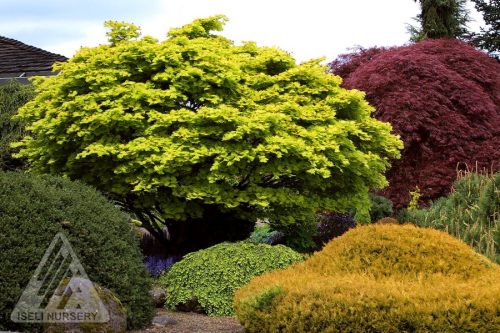
‘Aureum’
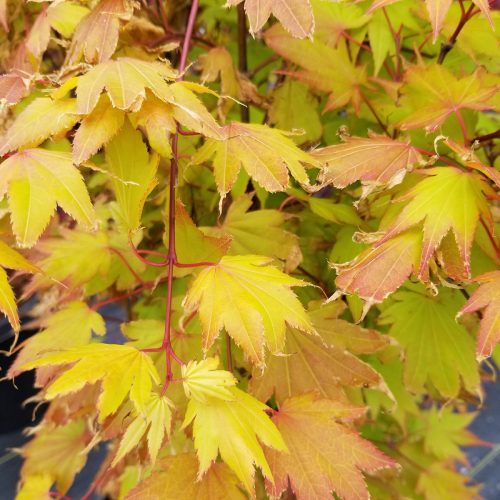
‘Autumn Moon’
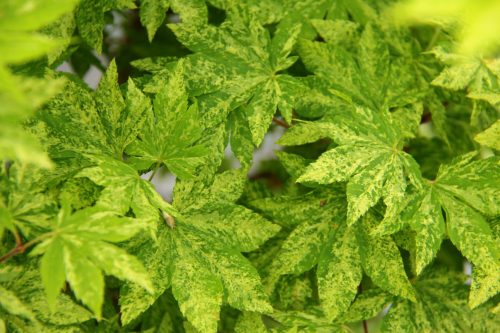
‘Kumo nishkik’