Perennial Spotlight
Peonies
Paeonia lactiflora
Garden Peony
Peonies are classic garden plants that add a bit of nostalgia and charm to the garden. Their fragrant blooms and lush foliage have made them popular for years, and with the recent resurgence in breeding, they will continue to improve. Peonies are simple to grow and can be utilized in many ways, including mass plantings, specimens, or hedges. By choosing a mixture of early, midseason, and late blooming varieties, you can have blooms for up to 6 weeks.
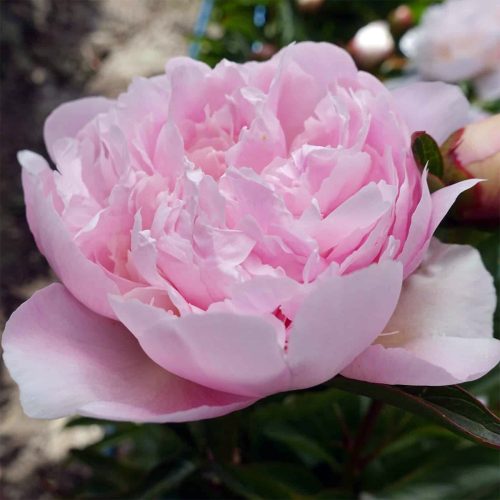
‘Alertie’
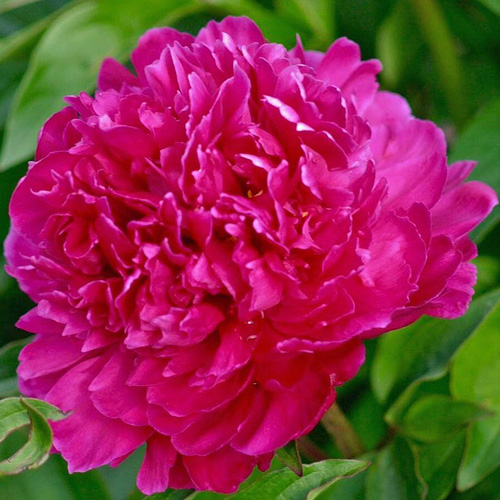
‘Brands Magnificent’
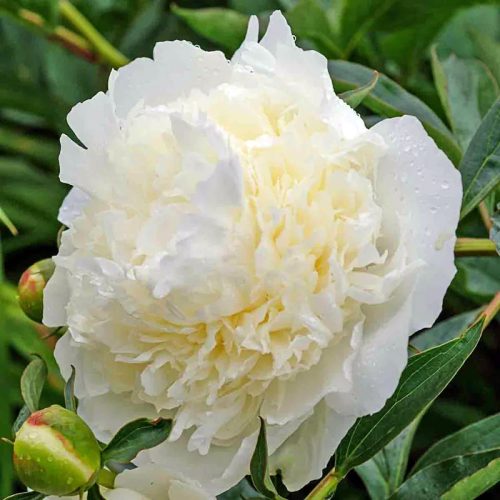
‘Duchess de Nemours’
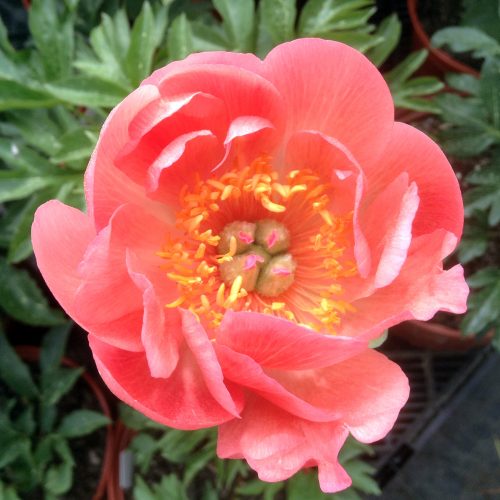
‘Coral Charm’
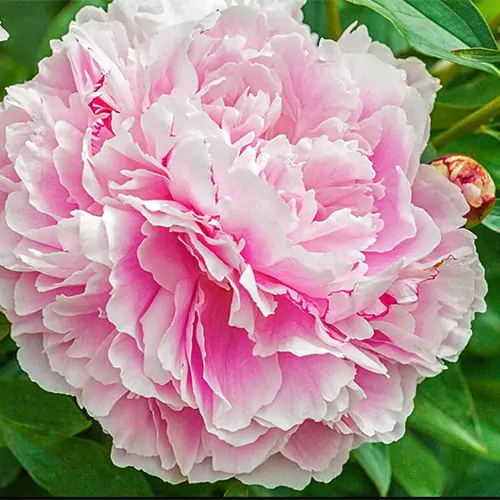
‘Joker’
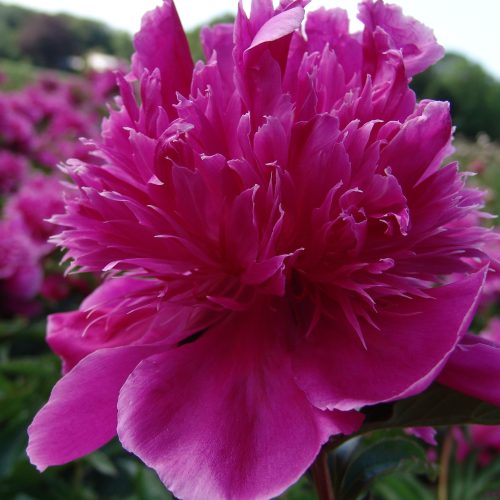
‘Purple Spider’
Itoh Hybrids
Intersectional Peonies
Intersectional peonies are a relatively new class of Paeonia created by crossing herbaceous garden types with woody tree types. They are often called “Itoh Peonies” because the original cross was first made successfully by Japanese nurseryman Mr. Toichi Itoh in 1948. Sadly, he passed away before ever seeing one of his crosses bloom. Since that time, other hybridizers have continued his work including American breeder Roger Anderson.
Intersectional Peonies offer the best qualities of both garden and tree peonies combined. Exceptional foliage and extended bloom time make them a must-have for every gardener.
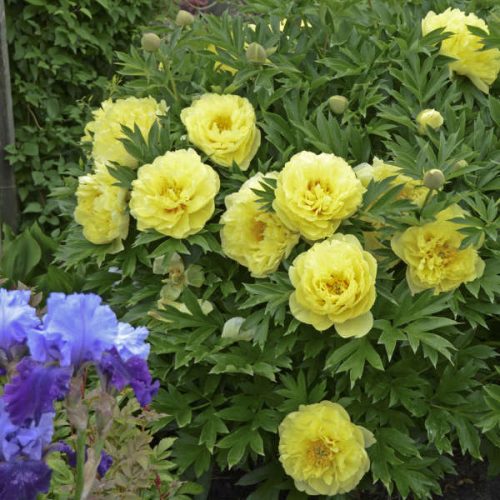
‘Bartzella’ ITOH
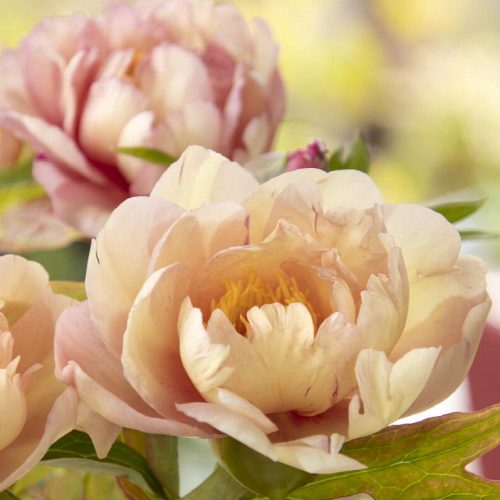
‘Singing in the Rain’ ITOH
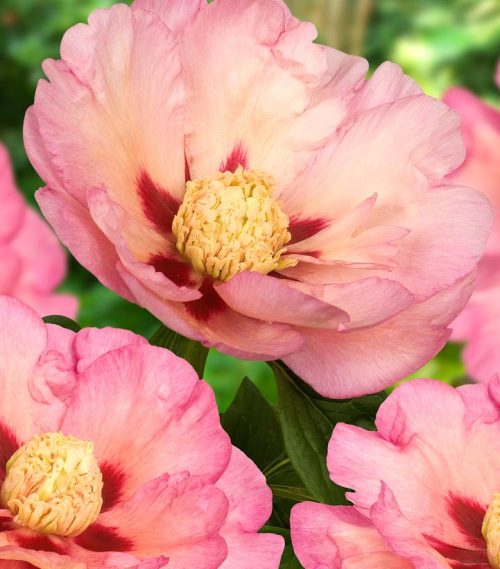
‘Pastel Splendor’ ITOH
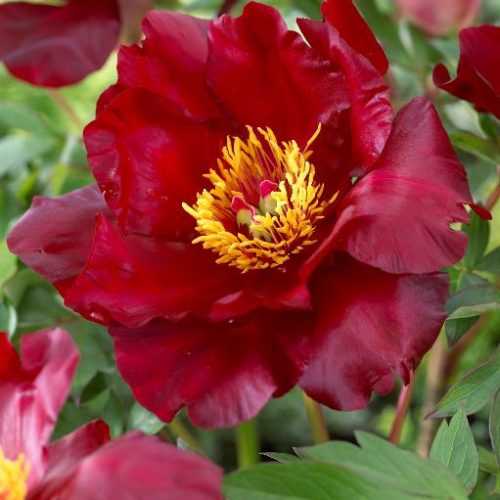
‘Scarlet Heaven’ ITOH
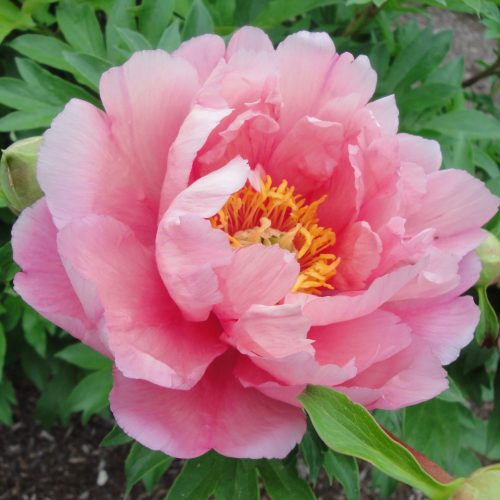
‘Pink Double Dandy’ ITOH
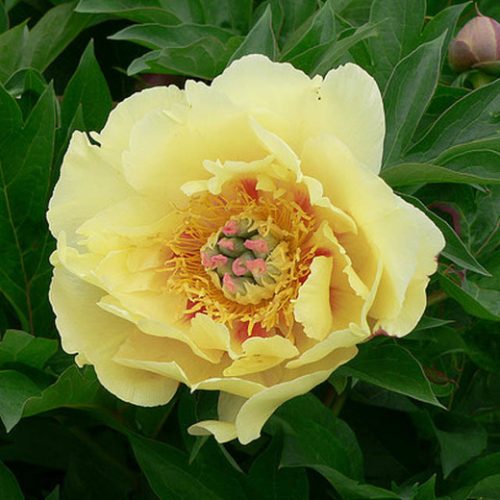
‘Garden Treasure’ ITOH
Paeonia suffruticosa
Tree Peony
While you are able to view our tree peony plants when you visit, they are not ready to go home yet. If you see one you love, please put it on hold by paying for it at check out. We can assist you with tagging your plant. Our tree peonies should be rooted by the first week in July (it could take a little longer), we will call you when ready for pick-up.
Tree peonies are not trees at all, these long-lived, woody, shrubs attain a height of only three-to five-feet tall, but they are beautiful, and captivating in blossom. All of these small shrubs originated in China, Tibet or Bhutan, on forested mountains, but from the 8th century on, have also been extensively cultivated in Japan.
It is the robust, fragrant, flowers though, 6 to 10 inches across, that that have made them such universal favorites. It has long been regarded as “the king of flowers”, in China.
Best grown in deep, fertile, medium moisture, well-drained soil in full sun to part shade. Tolerant of summer heat. Add compost as needed before planting. Larger shrubs appreciate some shelter from strong winds. Unlike herbaceous peonies, the stems of tree peonies (which are woody shrubs) do not die to the ground in winter and should not be cut back after frost. Remove spent flowers after bloom. These long-lived plants usually take several years to establish, and are best left undisturbed once planted. Moreover, plant roots go deep and transplanting can be difficult.
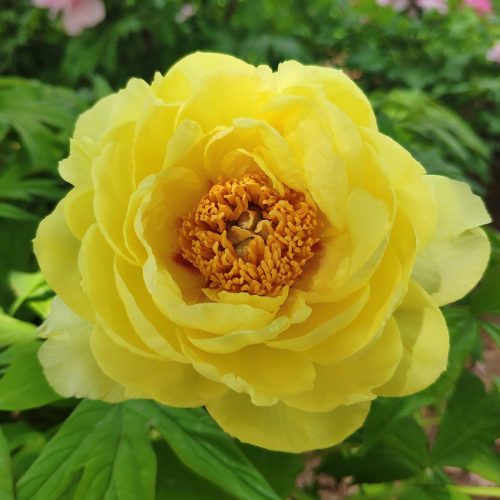
‘Huang Guan’, Golden Crown
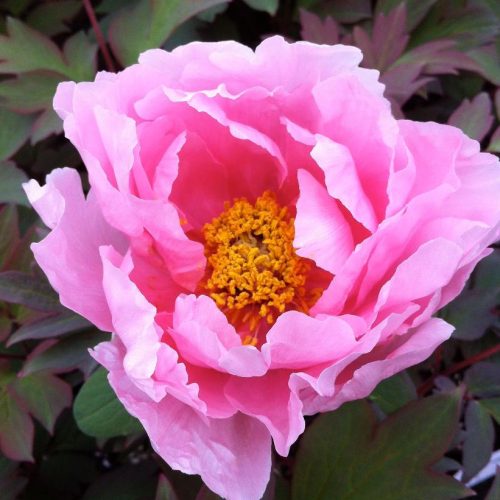
‘Hanakisoi’, Floral Rivaly

Blue Sapphire