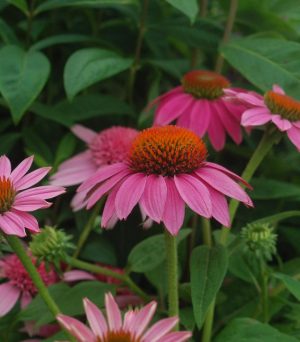
Brilliant colors, superior branching and blooms early in the first summer in the landscape. Bright burgundy pink blooms are fade-proof and absolutely unique. Ideal for use in meadows or borders. Good cut flowers. Attracts butterflies. Strong, upright grower. A tough plant that handles heat with ease. Prefers well-drained soil in full sun. Very drought tolerant.
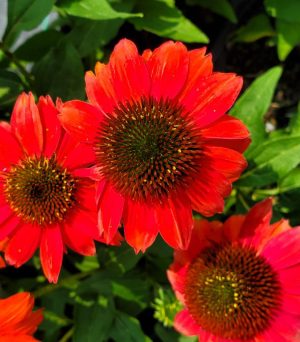
This incredibly colorful coneflower is a mixed strain showcasing shades of red flowers, including reddish-orange and pinkish red. A shorter plant that’;s perfect for small spaces.
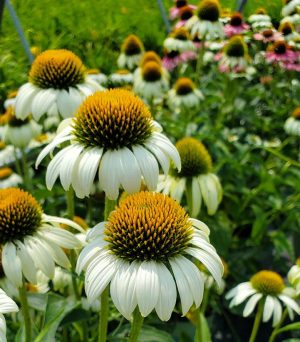
You’ll find it hard to find anything you won’t like about this long blooming, extremely hardy perennial and the same goes for a multitude of landscape critters! ‘Happy Star’ forms a tall, narrow upright profile in the garden that is perfect for the middle or back of any garden that grows in full sun. Flower buds begin to form in early July and, by later in the month, you’ll be enthralled by the big, white daisies that emerge. Enjoy their fragrant beauty in the garden or in a vase but be willing to share because native bees and butterflies cherish this plant’s nectar while sparrows, finches, cardinals, and others will gorge themselves on its seed. ‘Happy Star’ blooms into early September and is an absolute must for your American Beauties garden.
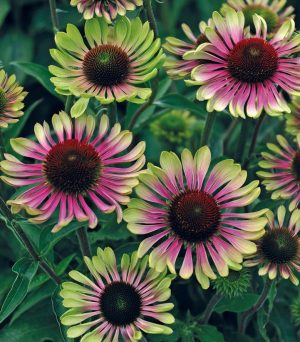
‘;Green Twister’; has lemon-lime petals that transition to a light pink or carmine red near the center cone. A robust plant with strong stems to hold the flowers upright when they bloom in mid-summer to fall. Stems lengthen after the first year and make excellent cut flowers. This plant is a natural mutation of ‘;Magnus’;, it is not a hybrid and therefore overwinters better than many modern hybrids. Coneflowers are well known for attracting butterflies and other pollinators and the seeds are relished by birds in the autumn. Drought resistant once established and easy to grow in sun and light shade.
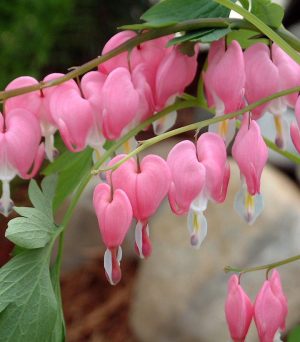
Old-fashioned bleeding heart. Largest flowers of the group, pleasantly pink. Round growth habit brings the plant to 30″ tall and wide. Blooms May through June. Potential mid-summer dormancy, yet will reflourish with sufficient moisture and shade.
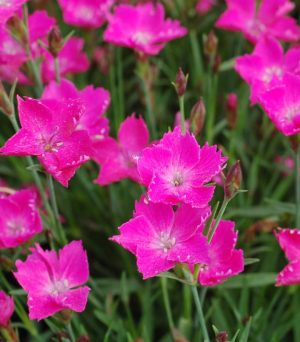
Kahori, meaning fragrance in Japanese and for this Dianthus it proves true to name! A dense cushion of grey green foliage is smothered all season with bright pink blooms which are sweetly scented , and great for cutting. Extremely hardy, weather resistant and perfect for containers and borders.
A real workhorse in the perennial border, ‘Zagreb’ will bloom from late June to late August adding color to the garden during the hottest part of the summer. Bright yellow daisy flowers with a darker yellow disk are tightly grouped above its needle-like green foliage. A compact plant that is more upright and less rounded than its more famous relative Coreopsis ‘Moonbeam’, ‘Zagreb’ is a great companion to mingle with other sun lovers since its thin foliage and constant color are make it so easy to work with. Tolerant of heat, humidity and drought, plant ‘Zagreb’ in any sunny border with well drained soil, the bigger the group you plant, the more impressive the summer show! Be sure to give it a quick shearing as flowers fade in August to promote a colorful later September rebloom!
This 1992 perennial plant of the year still packs a summer garden punch that few plants can equal! Pale yellow daisy flowers seem to float above delicate, needlelike foliage nearly all summer long and even into the fall once they start blooming in early July. Few perennials can match the reblooming power of ‘Moonbeam’ as loads of buds rise above spent flowers to keep adding color to the garden. ‘Moonbeam’ is drought tolerant and deer resistant and its ability to fill in around other sun loving perennials with its thin, non-shading foliage makes this easy to grow selection a perfect companion plant in the garden. For a powerful statement, group ‘Moonbeam’ in the middle of any sunny, well drained planting area and watch the summer fireworks!
Ablaze with butter yellow blossoms with a soft red eye that extends to cover more of the petal in cooler temperatures. Forms a compact mound of medium green foliage that stays clean and neat all season. Sterile flowers need no deadheading. Attractive in mass plantings. Excellent cut flower.
Enjoy this perennial year after year.Soft pink flowers appears atop the compact clump of deep blue-green foliage in spring. The flowers lighten to lavender with age. Smaller size; well-suited to urban landscapes.
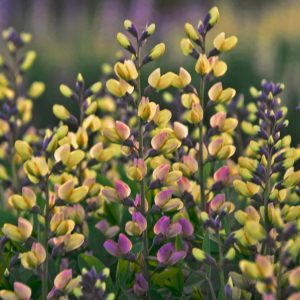
Soft yellow flowers appears atop the compact clump of deep blue-green foliage in spring. The flowers age to dusty raspberry purple, showing both colors at the same time.
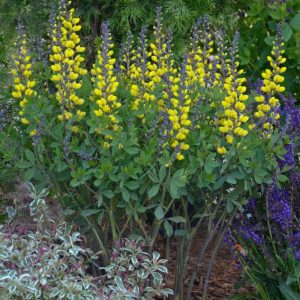
An impressively vigorous native cultivar. Long, charcoal grey stems carry the cool lemon yellow flowers, producing an excellent floral display atop the compact, upright mound of blue-green foliage. You’ll be impressed with the excellent vigor of this yellow flowered selection. It forms an upright, vase-shaped mound of attractive blue-green foliage topped with long, charcoal stems which carry the lemon yellow flowers in late spring to early summer, followed by decorative seed pods in fall. The contrast of dark stems with light flowers really pops in the landscape, delivering an excellent floral display. This easy care, drought tolerant, deer resistant perennial is an excellent choice for gardeners looking for low maintenance or native perennials.
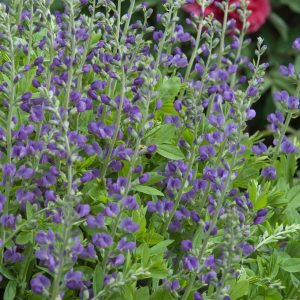
Stately and stunning are two words that accurately sum up this American Beauties native that is long lived and easy to grow. While a perennial that dies back to the ground each year, Baptisia looks like a shrub once it emerges from the soil with multiple, tall, upright, almost woody stems creating a big, beefy bush with deep green pea-like foliage. By mid-May, the top of each stem sports a string of buds that open by late month revealing deep, indigo blue, hooded, pea-like flowers that may stretch 6-8″ high. The color is stunning against the foliage backdrop and the flowers are long lasting, staying in color well into June. Baptisia is easy to grow in any sunny, well-drained soil. It is drought tolerant and has an extensive root system which makes it difficult to move once established so find it a permanent home and enjoy the color!
Shimmer in the shade with ‘Pictum’. The silver-purple sheen that covers the plant is what makes it an irresistible addition to the garden. Prefers moist soils on the woodland edge yet will tolerate more sun in cooler climates. PPA Plant of the Year 2004.
This impressive shade lover is one of the most tolerant ferns you can grow while providing a subtle injection of color into an area that may need a little shaking up at times! Lacy, deep green fronds are held aloft by vibrant burgundy stems to create a bi-color fountain effect in the landscape that is outstanding and loaded with texture. ‘Lady in Red’ forms a sizeable clump as it matures and provides excellent cover to a number of native songbirds while providing nesting material from dried fronds. Plant it in groups in moist soils for best performance but ‘Lady in Red’ is one of the most tolerant ferns of slightly drier soils, too!
This early blooming beauty will captivate you with mounding, deeply cut, lustrous, dark green foliage and an ample display of airy, pale pink flower spikes starting in mid to late May and continuing into late June.
Many people think there is no better red flowering Astilbe that ‘Fanal’ but we think that ‘Montgomery’ is far superior. Its deep red flower color in early June is richer and more vibrant that ‘Fanal’ but that’s only the start of what makes this plant stand out. Its foliage is incredible! It emerges from the ground bronzy red in the early spring and, even as it matures to a deep, lustrous green as the spring progresses, it retains an infusion of red color that makes it jump at you from the landscape and enhances its red flower color. It’s a perfect plant for partial shade and moist, well-drained soil and is a knockout when planted in groups. Watch for even more color as the hummingbirds make a bee-line to the open flowers!
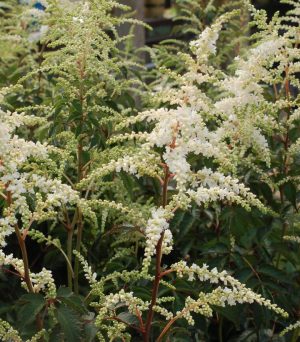
Deutschland’ Astilbe starts the spring with a mound of bronzy, deep green foliage. This deeply cut foliage provides great texture for any shady area spring through fall and provides a stunning backdrop for creamy white plumes that rise above the foliage and open in late June attracting nectar seeking hummingbirds and butterflies. ‘Deutschland’ thrives in moist, shady locations and is popular for border plantings or alongside water areas. Its magnificent blooms are superb for both fresh or dried flower arrangements while its dark foliage blends seamlessly with small to medium size gold-leafed hostas or ferns. Plant this deer, rabbit, slug and rodent resistant beauty in groups for maximum impact. In order to keep Astilbe looking good for the next year, do not cut it back in the winter, (the old foliage helps protect the plant from winter damage), but prune in early spring.
Same small habit like all chinensis-type Astilbes, but an incredible new flower color! Deep red buds open to pinkish-red flowers, these will surely brighten up the garden as many plants start to fade at the end of the summer. Blooms July-August.
Broad leaves with deep cuts are what make this variety different from the others. Not to mention the incredibly bright lilac-purple flowers that bloom all summer. A shorter, more compact form allows for ‘Visions’ to be planted anywhere you have a shady gap to fill. Blooms July-August.